
Who Was Mary Magdalene in the Bible? The Full Story
The Bible never calls her what tradition called her. It calls her something better.
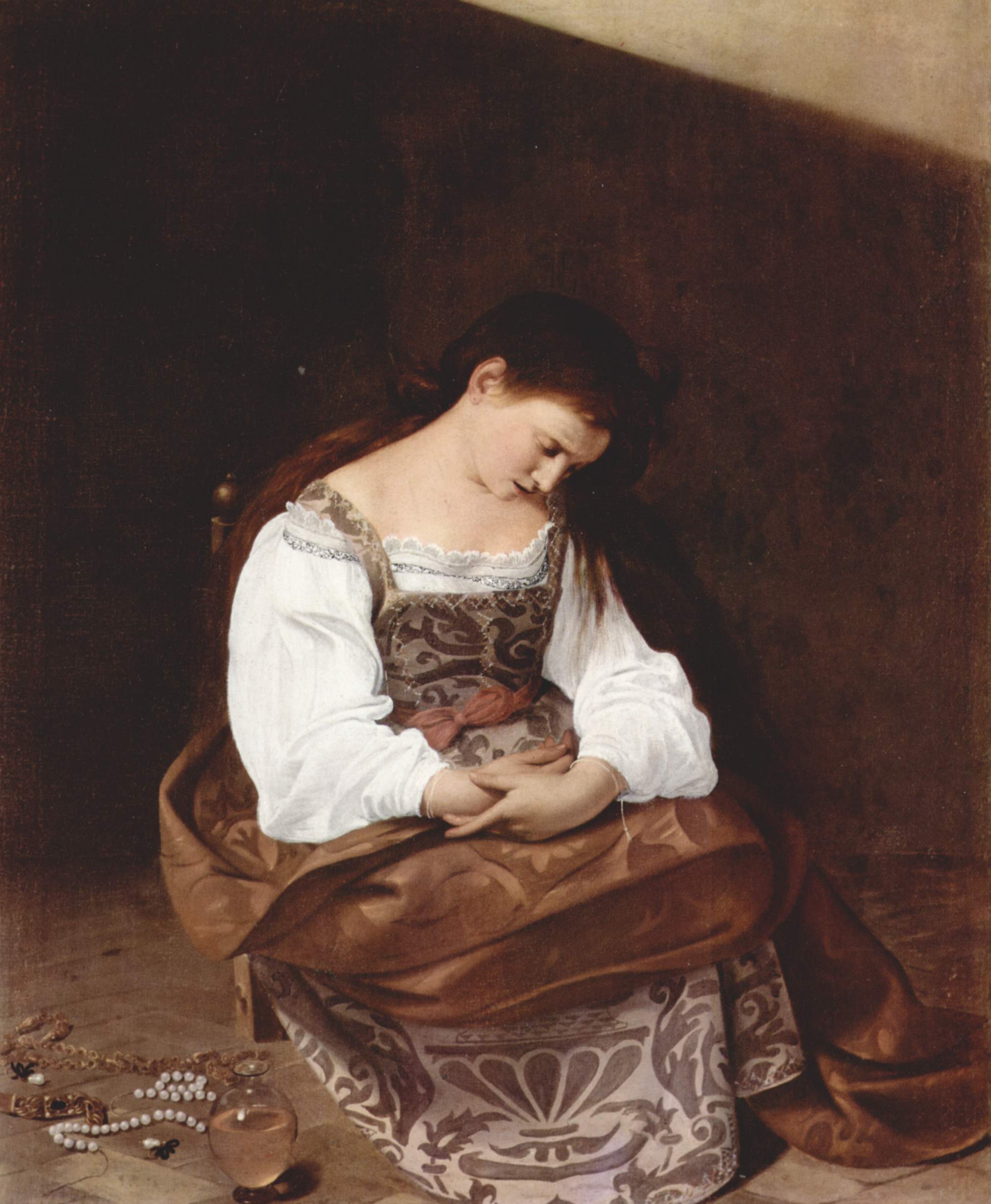
- Era
- First century, ministry and resurrection of Jesus (around AD 27 to 33)
- Role
- Disciple of Jesus, financial supporter of his ministry, first witness of the resurrection
- Key chapters
- Luke 8:1-3, Matthew 27:55-56, Mark 15:40-41, John 19:25, John 20:1-18, Mark 16:9, Matthew 28:1-10, Acts 1:14
- Famous line
- Jesus said to her, Mary. She turned toward him and cried out in Aramaic, Rabboni, which means Teacher (John 20:16)
By Daniel Reeves · Editor, The Bible Well
Published
You probably know the name. You may not know the story. Mary Magdalene shows up in all four Gospels, more often than most of the twelve apostles, and almost everything popular culture has told you about her is wrong. She was not a prostitute. She was not Jesus' wife. She was not the unnamed sinful woman of Luke 7, and she was not Mary of Bethany. Those are later conflations, some of them centuries late, and Scripture refuses every one of them. What the Bible actually says about her is harder, smaller, and more pastoral than the legends. She was a woman Jesus healed. She followed him. She stayed at the cross when almost no one else did. She came to the tomb at dawn. She was the first person to see the risen Christ, and the first person he sent with the message that the resurrection had happened. This page walks through the eight passages that mention her by name and what her story is doing in your life right now.
Where Mary Magdalene appears in the Bible
She appears in eight passages across the four Gospels and once more in Acts. That is the full canon on her by name, and the passages cluster around three moments in Jesus' life: his Galilean ministry, his crucifixion, and his resurrection.
The first is Luke 8:1-3, which introduces her in the middle of Jesus' Galilean ministry as one of several women traveling with him and supporting the work financially.
The second is the crucifixion. Matthew 27:55-56, Mark 15:40-41, and John 19:25 all place her at the cross, watching as Jesus dies.
The third is the burial. Luke 23:55 says the women who had come with Jesus from Galilee followed Joseph of Arimathea and saw the tomb and how the body was laid in it.
The fourth is the resurrection morning. Matthew 28:1-10, Mark 16:1-8, Mark 16:9, John 20:1, and John 20:11-18 all describe her arriving at the tomb and, in three of the four accounts, meeting the risen Jesus before anyone else.
The fifth is a single line in Acts 1:14, where the women, presumably including Mary Magdalene, gather with the disciples in the upper room after the ascension.
That is it. No infancy narrative for Mary Magdalene. No conversion story. No marriage story. No death story. Eight passages by name across roughly six years of recorded gospel history, and the weight of her story rests on what she did in the last week of Jesus' life and the first morning after his resurrection.
The seven demons of Luke 8:2 and what Scripture actually says about her past
The first time her name appears in the New Testament is Luke 8:2. The verse runs as part of a list of women who traveled with Jesus and the twelve.
and also some women who had been cured of evil spirits and diseases: Mary (called Magdalene) from whom seven demons had come out;
— Luke 8:2
That is the entire scriptural record of her pre-conversion life. One verse. Twenty-five words in English. Cured of evil spirits, seven demons had come out, that is it.
Notice what the text does not say. It does not describe what the possession looked like. It does not say how long she had it. It does not say what caused it. It does not say where she was when Jesus found her, or how the exorcism happened, or what she said to him afterward. It does not connect the demons to any specific sin. In the Gospels demon possession is treated as an affliction, like illness, which is exactly how Luke pairs it here, evil spirits and diseases, in the same breath. Mary belongs in that company. She was sick. He healed her. The verse moves on.
Some readers want the seven demons to mean seven specific sins. Scripture does not authorize that reading. The number seven in Hebrew thought signals completeness or fullness, the way we might say all the way through or every corner of her. Whatever was wrong with her was total. And the healing was also total. Cured, the verse says. Out, the verse says. She is free.
What the verse does give you is who Mary Magdalene is from this point forward in the story. She is a woman Jesus healed. That is the load-bearing fact. Everything she does in the rest of the Gospels, the following, the funding, the standing at the cross, the running to the tomb, flows from being a healed woman in the presence of the one who healed her.
The prostitute that wasn't
If you have heard one thing about Mary Magdalene, it is probably the thing the Bible never says about her. The legend that she was a prostitute, or a reformed prostitute, or a woman whose past was sexually shameful, is not in Scripture. It comes from a single sermon preached in Rome in the year 591.
In that year Pope Gregory I, also known as Gregory the Great, preached Homily 33, in which he merged three different women in the Gospels into one composite figure. The three women were Mary Magdalene of Luke 8:2, the unnamed sinful woman who anointed Jesus' feet in Luke 7:36-50, and Mary of Bethany who anointed Jesus' feet in John 12:1-8. Gregory took the unnamed sinful woman of Luke 7, whose sin is not specified in the text but was assumed by Gregory to be prostitution, and identified her with Mary Magdalene of Luke 8:2, which appears in the very next chapter. He then identified both of them with Mary of Bethany. One composite woman. One scandalous backstory. One image that ran through Western art and preaching for the next fourteen centuries.
The Eastern Orthodox church never accepted the conflation. They kept Mary Magdalene as a separate figure and continued to honor her by an older title, Equal to the Apostles. The Catholic church kept Gregory's conflation in its calendar and liturgy until 1969, when the Roman Calendar reform formally separated Mary Magdalene from the unnamed sinner of Luke 7 and from Mary of Bethany. Modern scholarship, Catholic and Protestant alike, is now united on this point. The conflation has no basis in the text.
Sandra Glahn, professor of media arts and worship at Dallas Theological Seminary and one of the most careful evangelical writers on women in Scripture, has spent two decades pushing back against the Gregory legend. Her short answer is the right one. The Bible never calls Mary Magdalene a prostitute. It never says she was sexually immoral. It never says her seven demons were sexual in nature. What it says is that she was healed and that she followed.
If you came to this page expecting the scandal, the Gospels offer something better. They offer dignity. They offer a healed woman, named by Jesus, walking with him from Galilee to the cross to the tomb to the garden to the upper room. They define her by what Jesus did for her, not by what someone else did to her or what she did before he found her.
Mary at the cross
By the time Jesus is crucified, most of the male disciples have run. The Gospels say so plainly. Mark 14:50 records that all of them deserted him and fled. Peter is denying him in the courtyard of the high priest. The rest are scattered. The women, by contrast, are at the cross.
Many women were there, watching from a distance. They had followed Jesus from Galilee to care for his needs. Among them were Mary Magdalene, Mary the mother of James and Joseph, and the mother of Zebedee's sons.
— Matthew 27:55-56
Mark adds the same scene with slightly different names.
Some women were watching from a distance. Among them were Mary Magdalene, Mary the mother of James the younger and of Joseph, and Salome.
— Mark 15:40
John brings the women in even closer.
Near the cross of Jesus stood his mother, his mother's sister, Mary the wife of Clopas, and Mary Magdalene.
— John 19:25
All three synoptic Gospels name Mary Magdalene first in their lists. That ordering is not random. In ancient lists the name that comes first is usually the most prominent member of the group. By the time of the crucifixion, Mary Magdalene is the lead figure among the women who followed Jesus from Galilee. She is the one Matthew, Mark, and John reach for when they want to name who was there.
Watching from a distance. Near the cross. Those phrases will outlast almost every other description in the passion narrative. Whatever the men did or did not do that afternoon, the women stayed. Mary stayed. She is at the cross until Jesus dies. Mark 15:47 then notes that she and Mary the mother of Joseph saw where the body was laid. They watched the burial. Luke 23:55 says they saw the tomb and how his body was laid in it.
She does not leave. That is the load-bearing detail. She does not leave when the men leave. She does not leave when the soldiers gamble for his clothes. She does not leave when the sky goes dark. She does not leave after the centurion's confession. She does not leave when Joseph of Arimathea wraps the body and rolls the stone into place. She stays until there is no more vigil to keep. And then she goes home to prepare spices, and she comes back at dawn.
Mary at the tomb
The Sabbath passes in silence. The Gospels are quiet about that long, dark day. And then, very early on the first day of the week, before the sun is fully up, Mary Magdalene comes back.
Early on the first day of the week, while it was still dark, Mary Magdalene went to the tomb and saw that the stone had been removed from the entrance.
— John 20:1
All four Gospels record her arrival at the tomb. The accounts have small differences in detail, the names of the women with her, the time of day, the order of events, but they agree on the central fact. Mary Magdalene is at the empty tomb on Easter morning, before any of the male disciples. Matthew 28:1 says, after the Sabbath, at dawn on the first day of the week, Mary Magdalene and the other Mary went to look at the tomb.
She has come to anoint a dead body. Mark 16:1 tells you so. She is not expecting a resurrection. She is expecting a corpse. What she finds is an open tomb and no body inside. In John's account she runs to tell Peter and the beloved disciple. They come, look, and leave. She stays.
Stayed is becoming a word that follows Mary Magdalene through the gospel. At the cross she stayed. At the burial she stayed. At the empty tomb, when the men have gone home confused, she stayed.
Rabboni and the garden scene
The next scene is the one that has stopped readers cold for two thousand years. Painters have come back to it. Hymnwriters. Poets. The garden encounter in John 20:11-18.
She is standing outside the tomb crying. She has seen the empty grave and she does not understand. She bends down to look one more time, and there are two angels sitting where the body had been. They ask her why she is crying. She answers them and turns around. And there is a man standing in the garden. She does not recognize him.
He asked her, "Woman, why are you crying? Who is it you are looking for?" Thinking he was the gardener, she said, "Sir, if you have carried him away, tell me where you have put him, and I will get him."
— John 20:15
She thinks he is the gardener. She is offering to carry the body of a man she watched die three days ago. She is grieving so completely she has missed who is standing in front of her. And then he says one word.
Jesus said to her, "Mary." She turned toward him and cried out in Aramaic, "Rabboni!" (which means "Teacher").
— John 20:16
Her name. He calls her by her name. And the moment he says it, she knows.
N.T. Wright, the New Testament scholar and former Bishop of Durham whose work on the resurrection narratives is among the most careful in modern scholarship, has pointed out that the verse is doing something the surrounding text has been preparing for. In John 10, the chapter on the good shepherd, Jesus had said that his sheep hear his voice and he calls his own sheep by name. In the garden on Easter morning he calls Mary by name, and she hears the voice that healed her in Galilee, and she knows. The whole gospel of John has been waiting for this single word. Mary.
She reaches for him. He stops her with a sentence she does not yet understand.
Jesus said, "Do not hold on to me, for I have not yet ascended to the Father. Go instead to my brothers and tell them, 'I am ascending to my Father and your Father, to my God and your God.'"
— John 20:17
Go. Tell. Two verbs. He sends her. And the message he sends her with is not about her own past, not about the seven demons, not about anything she has done or failed to do. The message is about him. He is ascending. He is going to the Father. And he is calling the disciples his brothers, for the first time in the gospel, on the morning of the resurrection, through the voice of the woman he just called by name.
The apostle to the apostles
She does what he sends her to do. John 20:18 closes the scene with a single sentence that has carried more weight in church history than almost any other line spoken by a woman in Scripture.
Mary Magdalene went to the disciples with the news: "I have seen the Lord!" And she told them that he had said these things to her.
— John 20:18
The Greek word apostle, apostolos, means a sent one with a message. By that definition, on the morning of the resurrection, Mary Magdalene is the first apostle of the risen Christ. She is the first person Jesus appears to, the first person commissioned to carry the news, and the first person to deliver it. The title the early church gave her, apostola apostolorum, the apostle to the apostles, is not a metaphor. It is a literal description of what John 20 says she did.
Mark 16:9 says the same thing in different words.
When Jesus rose early on the first day of the week, he appeared first to Mary Magdalene, out of whom he had driven seven demons.
— Mark 16:9
Appeared first. The phrase will not let you past it. Of all the people Jesus could have appeared to first, of all the disciples he had spent three years training, of all the Roman officials whose conversion would have shaken empires, of all the religious leaders whose endorsement would have legitimized the new movement, he appears first to a woman who, three years earlier, had seven demons. He shows up to the one he healed. He gives her the message before he gives it to anyone else.
That detail is doing apologetic work the New Testament authors did not have to include. In first century Mediterranean culture the testimony of a woman was generally not admissible in court. If you were inventing a resurrection story, you would not make a woman the first witness. You would invent a man. The fact that all four Gospels place Mary Magdalene at the tomb, and that three of the four name her as the first to see the risen Jesus, is one of the strongest historical arguments for the resurrection's authenticity. Lee Strobel and N.T. Wright have both pressed this point. You do not invent the embarrassing detail. You report it because it happened.
What Mary's story is doing in your life right now
Some of what Scripture gives you is information. Some of it is invitation. Mary Magdalene's story is both.
If you have ever felt defined by what was wrong with you, by what people said about you, by the version of yourself you carried into a search bar at midnight, Mary's story is the answer Scripture hands you. Jesus did not define her by the seven demons. The Gospels do not narrate her old sins. There is no chapter on what she did before. There is only the line that she was cured, and then the line that she followed, and then the line that she stayed, and then the line that he called her by her name.
If you have ever been told to come back when your faith is stronger, look again at the garden. She does not arrive at the tomb believing in the resurrection. She arrives expecting a corpse. She is grieving so hard she misses who is standing in front of her. And Jesus meets her there, in the tears, in the confusion, in the not yet understanding. He does not lecture her. He calls her name. The voice she had been listening for for three years says one word, and she knows.
If you have ever wondered whether your life can become a sent life, whether God can use what is left of you after the long defeat, watch what happens in John 20:17. Jesus does not commission Peter first. He does not commission the eleven first. He does not even commission a male disciple who has not just denied him three times. The first person sent with the news of the resurrection is a woman the demons had owned, the men had ignored, and the surrounding culture would not believe in court. Go, he says. Tell.
She goes. She tells. And the church has been telling the story she told ever since.
If you came to this page because someone you love has just died, watch her at the burial. She stayed. The men ran, Joseph of Arimathea wrapped the body, the stone closed the tomb, the Sabbath fell, and she did not leave. She came back at dawn with spices in her hands. Grief did not disqualify her from the resurrection. Grief was the door she walked through to find it.
You are not too broken for this story to include you. You are not beyond being called by name. The voice that said Mary in the garden is the same voice that knows yours. And the message he sent her with is the same one he is still sending. He is risen. Tell.
Frequently asked questions
+Was Mary Magdalene a prostitute?
+What does the Bible actually say about Mary Magdalene?
+Why is Mary Magdalene called the apostle to the apostles?
+Where do the seven demons come from in Mary Magdalene's story?
+What does Mary Magdalene teach Christians about shame and grace?
Further study
The careful evangelical work on Mary Magdalene starts with Sandra Glahn's writing on women in Scripture, particularly her Vindicating the Vixens, which gives Mary Magdalene a chapter of correction against the prostitute legend. N.T. Wright's The Resurrection of the Son of God is the most thorough scholarly treatment of the resurrection narratives and treats the women witnesses as the apologetic anchor they are. The BibleProject videos on the gospel of John walk through the John 20 garden scene with the same care.
For the wider story of grace meeting a healed disciple, the parable of the prodigal son is the next read. For the apologetic argument that the resurrection witnesses anchor, is God real is where this thread continues. For another woman whose covenant loyalty redefined her place in the story of God, Ruth is the companion piece. For a man Jesus restored after a defining failure, David's life is the parallel.
The single sentence to take home from this page is the one Mary spoke first. I have seen the Lord. She said it in the garden on the first day of the week, with the dew still on the grass, with her hands empty of the spices she had brought to anoint a dead body, with the voice of the man who called her by her name still ringing in her ears. That is the first sermon of the Christian church. It was preached by a woman the demons had owned and the Lord had healed. He is risen. Tell.
If you want to see her scenes on screen, The Chosen gives her a large role. For the resurrection morning she witnessed, read the study guide to John.
Related questions
+Was Mary Magdalene a prostitute?
No. The Bible never calls Mary Magdalene a prostitute, never says she was sexually immoral, and never connects her to the unnamed sinful woman of Luke 7. That label came from a single homily by Pope Gregory I in 591, which merged three different women in Scripture into one composite figure. The Vatican formally separated them again in the 1969 calendar reform. Most evangelical and Catholic scholars today agree the conflation has no biblical basis. What Luke 8:2 actually says is that seven demons had come out of her. That is exorcism language, not sexual-sin language. The Gospels never define her by sin. They define her by healing, fidelity, and testimony.
+What does the Bible actually say about Mary Magdalene?
The Bible says she was one of several women Jesus had healed (Luke 8:2), that she traveled with Jesus and helped fund his ministry from her own money (Luke 8:3), that she stood near the cross when most of the male disciples had fled (Matthew 27:55-56, Mark 15:40, John 19:25), that she watched where his body was laid (Luke 23:55), that she came to the tomb at dawn on the first day of the week (John 20:1), that she met the risen Jesus first in the garden (John 20:14-17, Mark 16:9), and that she was the first person commissioned to announce the resurrection (John 20:17-18). That is the full file.
+Why is Mary Magdalene called the apostle to the apostles?
Because Jesus sent her, with a message, to the other apostles. In John 20:17 the risen Jesus tells her, Go instead to my brothers and tell them, I am ascending to my Father and your Father, to my God and your God. The word apostle in Greek means a sent one with a message. Mary is the first person Jesus sends with the message that defines Christian faith. She delivers it in John 20:18, I have seen the Lord. The title apostle to the apostles is old. It was used by the third century writer Hippolytus and became standard in the medieval church. It is a literal description of what John 20 says she did.
+Where do the seven demons come from in Mary Magdalene's story?
Luke 8:2 is the only verse that mentions them. It introduces her among the women traveling with Jesus: also some women who had been cured of evil spirits and diseases, Mary called Magdalene from whom seven demons had come out. Scripture does not describe what the demons looked like, when they came in, what happened during the exorcism, or what her life was like before. Anything more than what Luke 8:2 says is speculation. The point of the verse is not the demons but the cure. She is healed and free, and she follows Jesus from Galilee to the cross.
+What does Mary Magdalene teach Christians about shame and grace?
Jesus does not define her by what was wrong with her. He defines her by healing, fidelity, and testimony. The Bible never narrates her past sins, never speculates about how the seven demons arrived, never sets her up as a cautionary tale. It moves past whatever she was before in a single sentence and gives the rest of the chapters to who Jesus made her. If you have been hiding from God under the weight of an old name, an old reputation, an old version of yourself you cannot stop carrying, Mary Magdalene's story is the answer Scripture hands you. Jesus knew her name. He called her by it. He sent her with the message that mattered most.