
The Biblical Story of Moses: Burning Bush, Red Sea, and the Prophet Who Died Outside the Land
From a basket on the Nile to a grave on a mountain no one can find, the story of the reluctant prophet who learned that God's deliverance runs through his own weakness.
- Era
- Roughly 1400s to 1200s BC (Late Bronze Age, exodus from Egypt)
- Role
- Prophet, deliverer, lawgiver, intercessor for Israel
- Key books
- Exodus, Leviticus, Numbers, Deuteronomy
- Famous line
- Here I am (Exodus 3:4) and Please send someone else (Exodus 4:13)
By Daniel Reeves · Editor, The Bible Well
Published
Moses is the most fully drawn human being in the first five books of the Bible, and the only person in the Old Testament whom God is said to have known face to face. He is rescued from the Nile as an infant, raised in the palace of the king who ordered his execution, exiled in his middle years, and called from a burning bush at eighty to lead a slave nation through the sea to the foot of a mountain that smoked under God's presence. He sees God's glory. He intercedes for a people who repeatedly want him dead. He sins once at a rock, in a way that costs him the land he has been walking toward for forty years. He dies on the mountain looking at it, and God himself buries him. This page is the whole arc, the way Scripture tells it.
Where to find Moses in the Bible
Moses' story runs across four books, Exodus through Deuteronomy. Exodus 2 to 4 covers his birth, exile, and call. Exodus 5 to 15 is Pharaoh, the plagues, Passover, and the Red Sea. Exodus 19 to 24 is Sinai. Exodus 32 to 34 is the golden calf and covenant renewal. Numbers walks through the forty wilderness years, including the rock at Meribah in chapter 20. Deuteronomy is three long sermons Moses gives before he dies in chapter 34.
If you have never read the story through, the easiest way in is Exodus 1 to 15, then 19 to 24 and 32 to 34, then Numbers 11 to 14 and 20, and finally Deuteronomy 30 to 34.
The basket on the Nile (Exodus 2)
The story opens with a king who is afraid. A new Pharaoh rules Egypt who does not remember Joseph. He sees the Hebrew population growing and decides to break them, first with forced labor and then with an order to drown every newborn Hebrew son in the Nile.
A Levite woman named Jochebed gives birth to a boy. She hides him for three months. When she cannot hide him any longer, she makes a small ark.
But when she could hide him no longer, she got a papyrus basket for him and coated it with tar and pitch.
— Exodus 2:3
The word for basket here is the same Hebrew used for Noah's ark. A mother facing infanticide builds a small ark for her son and puts him in the river the king has weaponized against her people. Pharaoh's daughter, of all people, finds it while bathing.
When the child grew older, she took him to Pharaoh's daughter and he became her son. She named him Moses, saying, "I drew him out of the water."
— Exodus 2:10
The name plays on the Hebrew mashah, to draw out. The infant who should have drowned is drawn out of the river by the daughter of the king who ordered him drowned, and raised in the palace. Stephen notes that Moses was educated in the full curriculum of Egypt and "powerful in speech and action" (Acts 7:22). That detail matters when, forty years later, Moses tells God he cannot speak.
Forty years on the back side of the desert (Exodus 2:11-25)
Moses grows up Egyptian but never forgets who his people are. One day, watching an Egyptian beat a Hebrew slave, he kills the Egyptian and buries the body in the sand. The next day, breaking up a fight between two Hebrews, one throws the murder back in his face. Word reaches Pharaoh. Moses runs.
He runs to Midian, defends a priest's daughters at a well, marries one of them (Zipporah), tends his father-in-law's flocks, and disappears from the story for forty years. The young man who tried to deliver his people by force ends up watching sheep at the back of the desert.
If you have ever spent years in what looked like the wrong place, doing what looked like the wrong work, this stretch is for you. Scripture does not skip the four decades when the future deliverer of Israel was nobody anyone in the palace would have remembered.
The burning bush (Exodus 3 to 4). The reluctant prophet
Moses is eighty years old when God finally speaks. He is grazing his flock near Horeb, the mountain that will later be called Sinai, when he sees a bush on fire that does not burn up. He turns aside to look. And then a voice.
"Do not come any closer," God said. "Take off your sandals, for the place where you are standing is holy ground."
— Exodus 3:5
The God of the patriarchs names himself.
Then he said, "I am the God of your father, the God of Abraham, the God of Isaac and the God of Jacob."
— Exodus 3:6
He has seen the misery of his people, he says, and he has come down to rescue them. Then comes the part of the call Moses cannot have been expecting.
So now, go. I am sending you to Pharaoh to bring my people the Israelites out of Egypt."
— Exodus 3:10
What follows is one of the most honest exchanges in the Bible. Moses says, Who am I? God answers, I will be with you. Moses asks for God's name. The answer has been pondered for three thousand years.
God said to Moses, "I am who I am. This is what you are to say to the Israelites: 'I am has sent me to you.'"
— Exodus 3:14
Moses tries again. They will not believe me. He cannot do signs. Finally he says the thing he has been circling.
Moses said to the Lord, "Pardon your servant, Lord. I have never been eloquent, neither in the past nor since you have spoken to your servant. I am slow of speech and tongue."
— Exodus 4:10
God answers that he made the mouth. Moses tries one last time, and this time the mask comes off.
But Moses said, "Pardon your servant, Lord. Please send someone else."
— Exodus 4:13
God's anger burns at this, but he does not withdraw the call. He gives Moses his brother Aaron as spokesman. And Moses, eighty years old and out of objections, walks back to Egypt.
John Piper has preached that the reluctance is part of the qualification. The man who says please send someone else and then goes is the one who ends up faithful in God's house. If you have ever felt God was asking something of you that you were not equipped for, you are in the company of the man Scripture later calls the most humble person on the face of the earth.
Pharaoh, the plagues, and the Passover (Exodus 5 to 12)
Moses' first audience with Pharaoh goes badly. The king's answer to let my people go is to double the workload. Israel turns on Moses. The deliverer arrives and things get worse.
What follows is the long, deliberate dismantling of Egypt's gods. Ten plagues, each targeted at a deity Egypt trusted. Blood, frogs, gnats, flies, livestock, boils, hail, locusts, darkness so thick it can be felt. After each, Pharaoh agrees to let Israel go and then changes his mind.
The tenth breaks him. The firstborn of every house in Egypt dies, unless the lintel of the door is painted with the blood of a lamb. Moses gathers Israel and gives them the instructions for the meal that will mark them as God's people for the next thirty-five hundred years.
The blood will be a sign for you on the houses where you are, and when I see the blood, I will pass over you. No destructive plague will touch you when I strike Egypt.
— Exodus 12:13
Israel goes free that night. The Passover lamb's blood on the doorframe is the first deliverance image the Bible gives you. The rest of Scripture, the New Testament writers will tell you, is asking what kind of lamb that lamb pointed to.
The Red Sea (Exodus 14)
Pharaoh's grief turns to rage. He sends chariots after the slaves he just released. Israel, camped between the wilderness and the sea, sees the dust on the horizon and panics. Was it because there were no graves in Egypt that you brought us out here to die? Moses' answer is the line the rest of his life will be built on.
The Lord will fight for you; you need only to be still.
— Exodus 14:14
The sea splits. The people walk through on dry ground. Pharaoh's army follows, the chariot wheels come off in the mud, the water collapses back. On the far shore, Moses' sister Miriam picks up a tambourine and leads the first recorded song of the redeemed people in the Bible. You will hear an echo of it at the end of Revelation, where the redeemed of every nation stand by another sea and sing what the text calls the song of Moses and the song of the Lamb.
Sinai and the Ten Commandments (Exodus 19 to 20)
Three months out of Egypt, Israel camps at the foot of the mountain Moses had stood on alone. It smokes. God descends in fire. Through Moses he tells the slave nation what they were rescued for.
Now if you obey me fully and keep my covenant, then out of all nations you will be my treasured possession. Although the whole earth is mine, you will be for me a kingdom of priests and a holy nation.' These are the words you are to speak to the Israelites."
— Exodus 19:5-6
The covenant is given. Moses goes up the mountain into the cloud, alone, to receive the law. The Ten Commandments begin with grace before they begin with command.
"I am the LORD your God, who brought you out of Egypt, out of the land of slavery. You shall have no other gods before me."
— Exodus 20:2-3
Notice the order. God identifies himself as the one who has already rescued Israel before he asks a single thing of them. The law is the response of a freed people to a God who has already saved them, not the price they pay for a salvation that has not yet arrived. Tim Keller wrote often about this. We obey because we are loved, not in order to be.
The golden calf and the intercession (Exodus 32)
While Moses is on the mountain receiving the law, Israel at the base of it is building an idol. He has been gone forty days and the people lose their nerve. Aaron, of all people, collects their gold and makes a calf. The same crowd that walked through the sea three months earlier bows down to it and says these are your gods, O Israel, who brought you out of Egypt.
God offers Moses a deal. He will destroy this stiff-necked people and make a new nation out of Moses. Moses refuses.
But Moses sought the favor of the LORD his God. "LORD," he said, "why should your anger burn against your people, whom you brought out of Egypt with great power and a mighty hand? Why should the Egyptians say, 'It was with evil intent that he brought them out, to kill them in the mountains and to wipe them off the face of the earth'?"
— Exodus 32:11-12
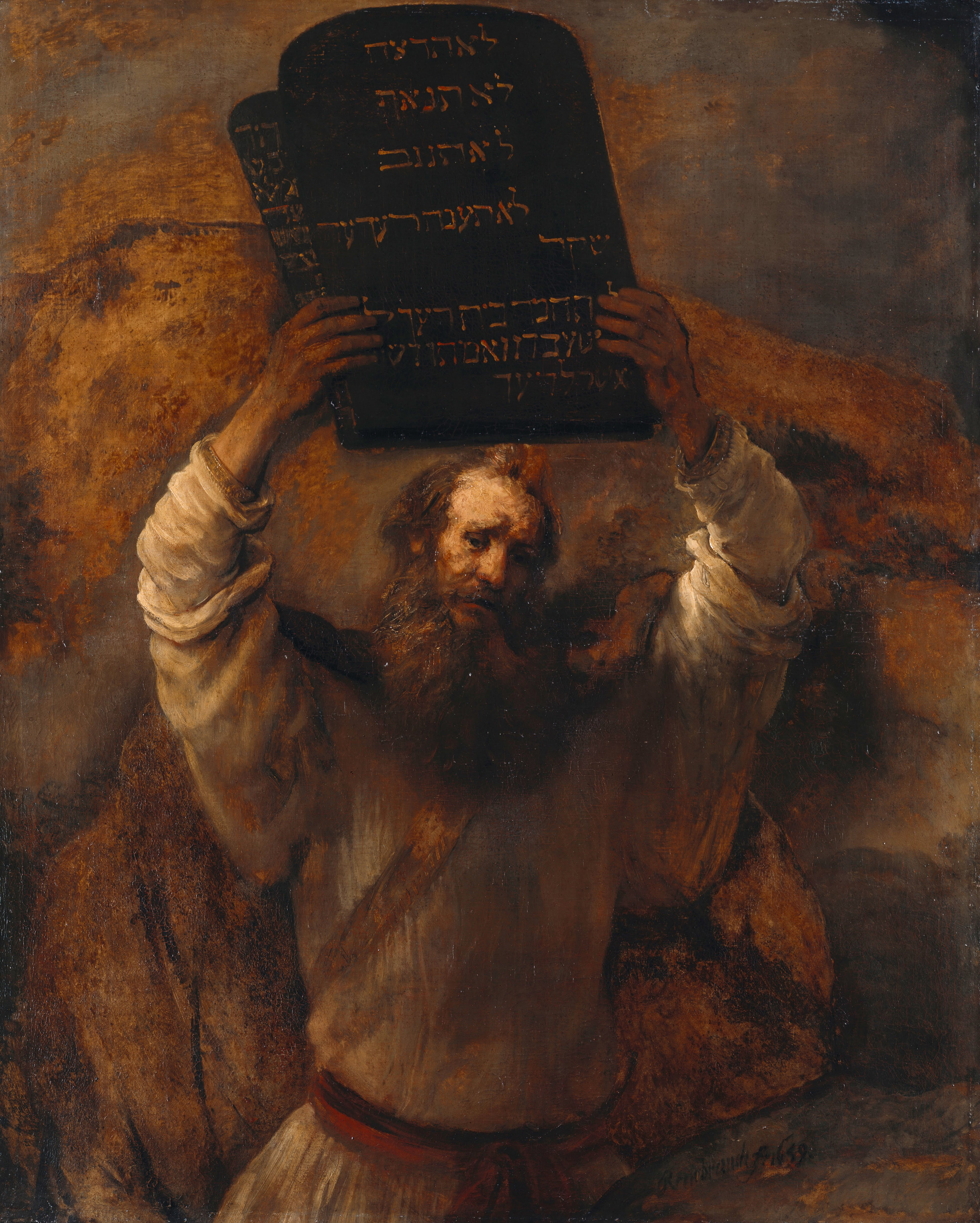
Moses argues God's reputation back to God. Then he comes down, sees the calf, smashes the tablets, burns the calf to powder, and goes back up alone with a line that has stopped readers cold for thirty centuries.
But now, please forgive their sin—but if not, then blot me out of the book you have written.
— Exodus 32:32
The intercessor offers his own name in place of theirs. He does not get the trade. But the prayer is recorded, and Paul will draw a straight line from it to Romans 9, where he says something similar about his own kinsmen. The shape of intercession in Scripture is laid down here.
"Show me your glory" (Exodus 33 to 34)
After the calf, Moses asks for something new. He has seen the bush, the sea, the mountain smoke, plagues, cloud, and fire. And he asks for more.
Then Moses said, "Now show me your glory."
— Exodus 33:18
God will not show Moses his face, because no one can see God and live. But he will pass by, let Moses see his back, and proclaim his name as he passes.
And the Lord said, "I will cause all my goodness to pass in front of you, and I will proclaim my name, the Lord, in your presence. I will have mercy on whom I will have mercy, and I will have compassion on whom I will have compassion."
— Exodus 33:19
The next morning Moses goes up the mountain with two new stone tablets. The Lord descends in a cloud. And the proclamation that has been the deepest definition of God's character ever since rolls out.
And he passed in front of Moses, proclaiming, "The LORD, the LORD, the compassionate and gracious God, slow to anger, abounding in love and faithfulness, maintaining love to thousands, and forgiving wickedness, rebellion and sin. Yet he does not leave the guilty unpunished; he punishes the children and their children for the sin of the parents to the third and fourth generation."
— Exodus 34:6-7
That sentence is quoted and prayed across the rest of the Hebrew Bible. Jonah throws it back at God in anger. The psalmists sing it. The prophets lean on it through national disaster. Mercy first, judgment real. That is the name God himself chose when Moses asked.
Moses comes down with his face radiant. He has to wear a veil. He does not even know that his face is shining. He has been near, and the nearness has marked him.
The rock at Meribah (Numbers 20). When Moses sinned
The wilderness years are long, and Moses bears them. The people complain about food, water, manna. They threaten to stone him more than once. Even Aaron and Miriam oppose him at one point, and the text pauses to tell you something the rest of the narrative quietly assumes.
(Now Moses was a very humble man, more humble than anyone else on the face of the earth.)
— Numbers 12:3
But Moses is not made of stone. Near the end of the wilderness years, the people gather again with the same complaint. No water. God tells Moses to take his staff, gather the assembly, and speak to the rock. Moses does part of it. The other part, he does not.
He and Aaron gathered the assembly together in front of the rock and Moses said to them, "Listen, you rebels, must we bring you water out of this rock?"
— Numbers 20:10
Then he strikes the rock twice with his staff. Water still comes. The people drink. But God's answer is one of the heaviest sentences spoken to any of his servants in the Old Testament.
But the LORD said to Moses and Aaron, "Because you did not trust in me enough to honor me as holy in the sight of the Israelites, you will not bring this community into the land I give them."
— Numbers 20:12
Forty years of faithful service. One moment of public anger at a rock. The text does not soften it. Charles Spurgeon said the lesson was not that God is harsh but that great service does not earn future passes. The deeper the calling, the heavier the moment of failure.
If you have ever served faithfully for years and blown it once in public, this scene is for you. Scripture does not erase Moses' failure or his calling. The man whose face had shone on Sinai still gets to climb Nebo and see the land.
Mount Nebo (Deuteronomy 34). Dying outside the land
Deuteronomy is Moses' farewell. He stands on the plains of Moab, looks across the Jordan at the land he has been walking toward for forty years, and gives Israel three long sermons. He recites the law, retells the story, and lays out the choice.
This day I call the heavens and the earth as witnesses against you that I have set before you life and death, blessings and curses. Now choose life, so that you and your children may live.
— Deuteronomy 30:19
Then he blesses the tribes, one by one. Then God tells him to go up the mountain. He climbs Mount Nebo alone. From the top, God shows him the whole land, north to south, west to east. And then, in the most quietly painful sentence in the Pentateuch, the text says:
And Moses the servant of the Lord died there in Moab, as the Lord had said. He buried him in Moab, in the valley opposite Beth Peor, but to this day no one knows where his grave is.
— Deuteronomy 34:5-6
God himself buries Moses. No funeral, no marker, no tomb that later generations could turn into a shrine. Alistair Begg has preached that the unmarked grave is itself a mercy. Moses points to God, never to himself, even in death.
The book closes with one last line about the man.
Since then, no prophet has risen in Israel like Moses, whom the Lord knew face to face,
— Deuteronomy 34:10
The Old Testament will spend the next thousand years waiting for another like him. The New Testament will say he has come.
The greater Moses (Hebrews 3). Christ-typology
The New Testament never asks readers to forget Moses. It asks them to see who he was pointing to. Three patterns it draws explicitly.
First, the deliverer. Moses leads Israel out of slavery to Pharaoh. Jesus delivers from slavery to sin and death. The Passover lamb in Exodus 12 is the echo the Gospel of John picks up when John the Baptist sees Jesus and says behold the Lamb of God.
Second, the lawgiver and covenant mediator. Moses brings the tablets down Sinai. Jesus, on another mountain, gives a deeper law, then dies on a third hill to inaugurate the new covenant the prophets had been promising.
Third, the intercessor. Moses, in Exodus 32, offers to be blotted out for his people. Jesus is actually blotted out. Hebrews makes the comparison directly.
"Moses was faithful as a servant in all God's house," bearing witness to what would be spoken by God in the future. But Christ is faithful as the Son over God's house. And we are his house, if indeed we hold firmly to our confidence and the hope in which we glory.
— Hebrews 3:5-6
The BibleProject team frames this well. Moses is faithful in God's house as a servant. Christ is faithful over God's house as the Son. The line is not drawn to flatten Moses. It honors him at his full height and then says someone greater has come.
The man who saw God's back at the cleft of the rock was looking forward at the same Jesus you are looking back at. The compassionate and gracious God of Exodus 34 is the God who comes to find you, and Moses, in all his weakness and faithfulness, is the line the story drew until the Son arrived.
Further study
For a literary and theological overview, the BibleProject Deuteronomy guide is a good starting point. Charles Spurgeon's sermons on Moses are still alive after a hundred years. Tim Keller's preaching series on Exodus is the most accessible long-form evangelical walk-through.
Joseph's life sets the stage for the family in Egypt that Moses will later lead out. Abraham is the man whose covenant Moses is carrying forward. David is the next great covenant figure, the shepherd-king to Moses' servant-prophet. If Moses' intercession for a rebellious people speaks to you, the parable of the prodigal son is where Jesus himself paints what the father's heart toward returning rebels looks like. And if you arrived here from a deeper question about whether any of this is true, our page on whether God is real sits with that question patiently.
Moses received the commandment about the name of the LORD, and readers who want to understand it will find help in is it a sin to swear. The God who spoke from the bush gives names that carry into the New Testament, which the Greek names of God traces. For the father of the covenant Moses served, read Abraham and Isaac.
Related questions
+Where is the story of Moses in the Bible?
Moses appears across four books of the Old Testament. His birth and call begin in Exodus 2 to 4. The plagues, Passover, and Red Sea fill Exodus 5 to 15. Sinai and the law run from Exodus 19 through Leviticus. The wilderness wandering is in Numbers. His final speeches and death are in Deuteronomy. The New Testament references him most fully in Hebrews 3 and 11, and in Stephen's sermon in Acts 7.
+What book of the Bible is Moses in most?
Exodus carries the most action, but Deuteronomy is the book most fully in Moses' own voice. Deuteronomy is essentially three long sermons Moses delivers to Israel on the plains of Moab, just before they cross into the land he himself will not enter. If you only have time to read one book to meet Moses, read Exodus. If you have time for two, add Deuteronomy.
+Why was Moses chosen by God?
Scripture never says Moses was qualified. He was educated in Pharaoh's court (Acts 7:22) and he had spent forty years tending sheep in Midian, which the text seems to treat as part of the preparation. But when God calls him at the burning bush, Moses lists five reasons he is not the right man, and God answers none of them on the merits. The call rests on God's choice, not on Moses' fitness.
+Why didn't Moses enter the promised land?
Numbers 20 records the moment. The people complained about water at Meribah. God told Moses to speak to the rock. Moses, angry, struck it twice with his staff and called the people rebels. Water still came. But God told Moses he had failed to honor him as holy in front of Israel, and that bar stayed. He saw the land from Mount Nebo. He did not cross. Deuteronomy 34 tells the rest.
+How does Moses point to Jesus?
Three ways the New Testament draws the line. Moses is the deliverer who leads Israel out of slavery, and Jesus delivers from sin and death. Moses brings the law down the mountain, and Jesus fulfills the law and gives the new covenant. Moses stands between God and a rebellious people, willing to be blotted out for them (Exodus 32:32), and Jesus is the greater mediator who actually is. Hebrews 3 puts it plainly. Moses was faithful as a servant in God's house. Christ is faithful as the Son over it.